Endogenous Antioxidant Precursors: Boosting Master Glutathione Defenses

Exogenous antioxidants like Vitamin C provide basic radical scavenging, but your cells depend primarily on their internal master antioxidant: **Glutathione (GSH)**. Composed of three amino acids—cysteine, glycine, and glutamate—glutathione neutralizes hydrogen peroxide, lipid peroxides, and heavy metals inside the cytoplasm and nucleus. ### The Rate-Limiting Bottleneck Intracellular glutathione levels decline dramatically with age due to … Read more
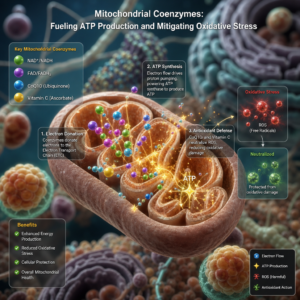
Mitochondrial Coenzymes: Fueling ATP Production and Mitigating Oxidative Stress

Mitochondria produce over 90% of the cellular energy required for human survival. Within the inner mitochondrial membrane, the electron transport chain (ETC) converts nutrient breakdown products into Adenosine Triphosphate (ATP). Without key lipid- and water-soluble cofactors, this process falters. ### Key Mitochondrial Nutrients 1. **Coenzyme Q10 (Ubiquinol):** Essential lipid-soluble electron shuttling agent that transfers electrons … Read more

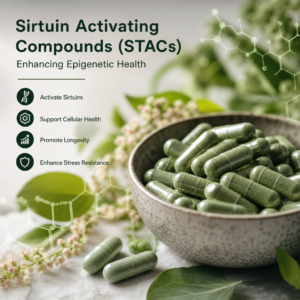
Sirtuin Activating Compounds (STACs): Enhancing Epigenetic Health

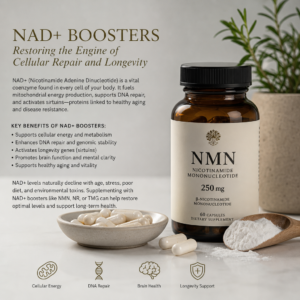
The aging process is strongly linked to epigenetic drift—a gradual breakdown in the structural packing of DNA that causes cells to lose their identity and express incorrect genes. Sirtuins are a family of NAD+-dependent deacetylase enzymes responsible for maintaining chromatin structure and genomic stability. ### The Mechanism of STACs Sirtuin Activating Compounds (STACs) act as … Read more

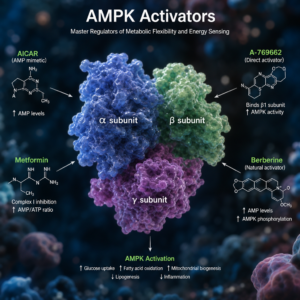
AMPK Activators: Master Regulators of Metabolic Flexibility and Energy Sensing

AMP-activated protein kinase (AMPK) serves as the chief energy-sensing enzyme inside human cells. When cellular energy (ATP) levels drop, AMPK activates to switch off energy-consuming storage processes and trigger pathways that generate fresh ATP. ### Metabolic Dysfunction in Aging As tissues age, AMPK signaling becomes blunted. Cells become less sensitive to insulin, leading to elevated … Read more

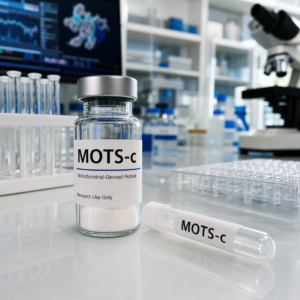
MOTS-c: The Mitochondrial-Derived Peptide Mimicking Exercise and Metabolic Health

Metabolic flexibility—the ability to efficiently switch between burning carbohydrates and fats—declines as we age, leading to insulin resistance, visceral fat gain, and inflammation. MOTS-c (Mitochondrial Open Reading Frame of the 12S rRNA-c) is a mitochondrial-derived peptide that acts as an endocrine metabolic signal across the entire body. ### Cellular Mechanism: Activating AMPK Under cellular stress … Read more

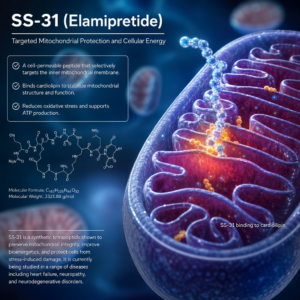
SS-31 (Elamipretide): Targeted Mitochondrial Protection and Cellular Energy

Mitochondrial decay is a foundational hallmark of aging. As inner mitochondrial membranes suffer oxidative damage, ATP production drops, reactive oxygen species (ROS) rise, and cellular function declines. SS-31 (Elamipretide) is a cell-permeable tetrapeptide created to repair mitochondrial energetics at the structural level. ### Targeting Cardiolipin The key mechanism of SS-31 lies in its selective affinity … Read more