
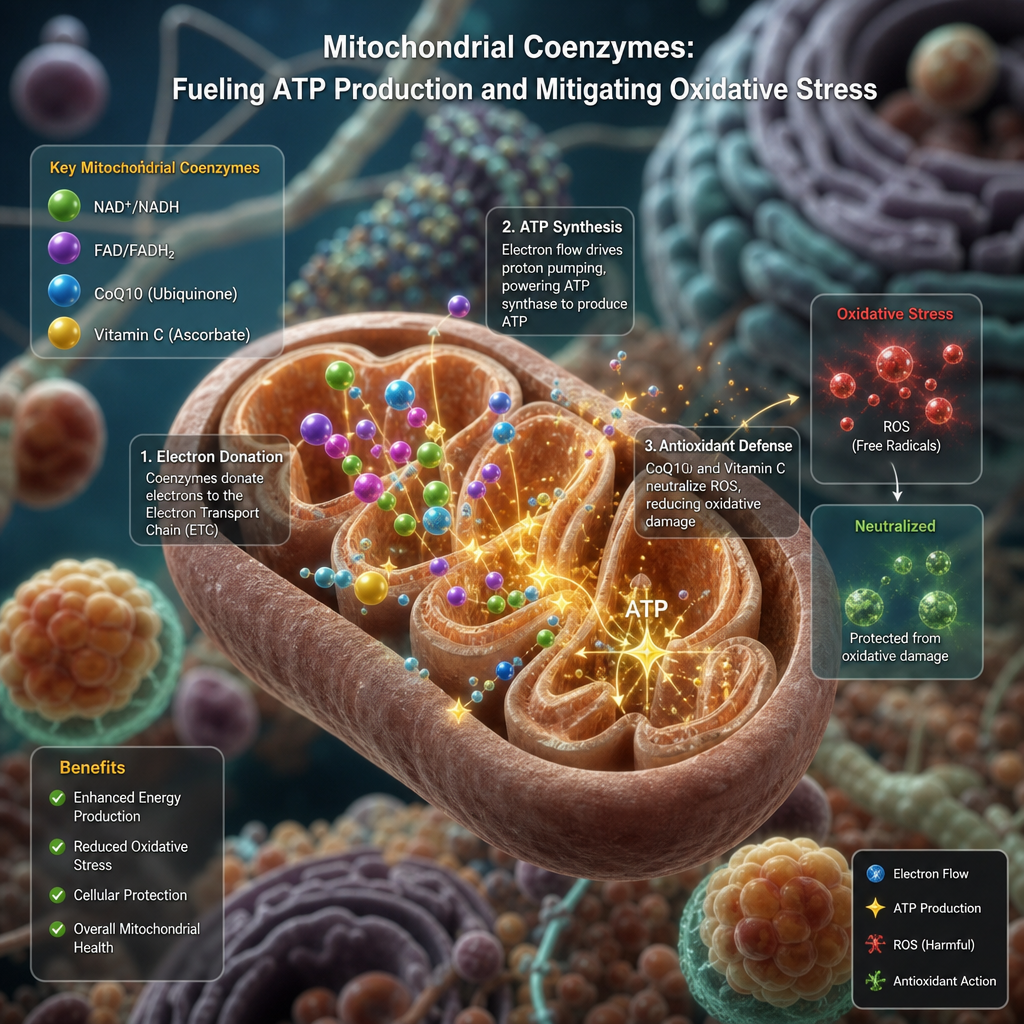
Mitochondria produce over 90% of the cellular energy required for human survival. Within the inner mitochondrial membrane, the electron transport chain (ETC) converts nutrient breakdown products into Adenosine Triphosphate (ATP). Without key lipid- and water-soluble cofactors, this process falters.
### Key Mitochondrial Nutrients
1. **Coenzyme Q10 (Ubiquinol):** Essential lipid-soluble electron shuttling agent that transfers electrons from Complexes I and II to Complex III in the ETC. It also acts as a potent intramembrane antioxidant, preventing lipid peroxidation.
2. **PQQ (Pyrroloquinoline Quinone):** A redox cofactor that triggers CREB and PGC-1alpha pathways, signaling the cell to generate entirely new mitochondria (**mitochondrial biogenesis**).
### Synergistic Biological Actions
* **Preserving Energy Output:** Maintains ATP output in high-demand organs like the heart, brain, and skeletal muscle.
* **Reducing Oxidative Damage:** Neutralizes free radical leaks directly at the electron transport chain.
### Anti-Aging Relevance
Combining Ubiquinol to optimize existing mitochondrial energy output with PQQ to grow new mitochondrial networks protects cells against metabolic decay.