
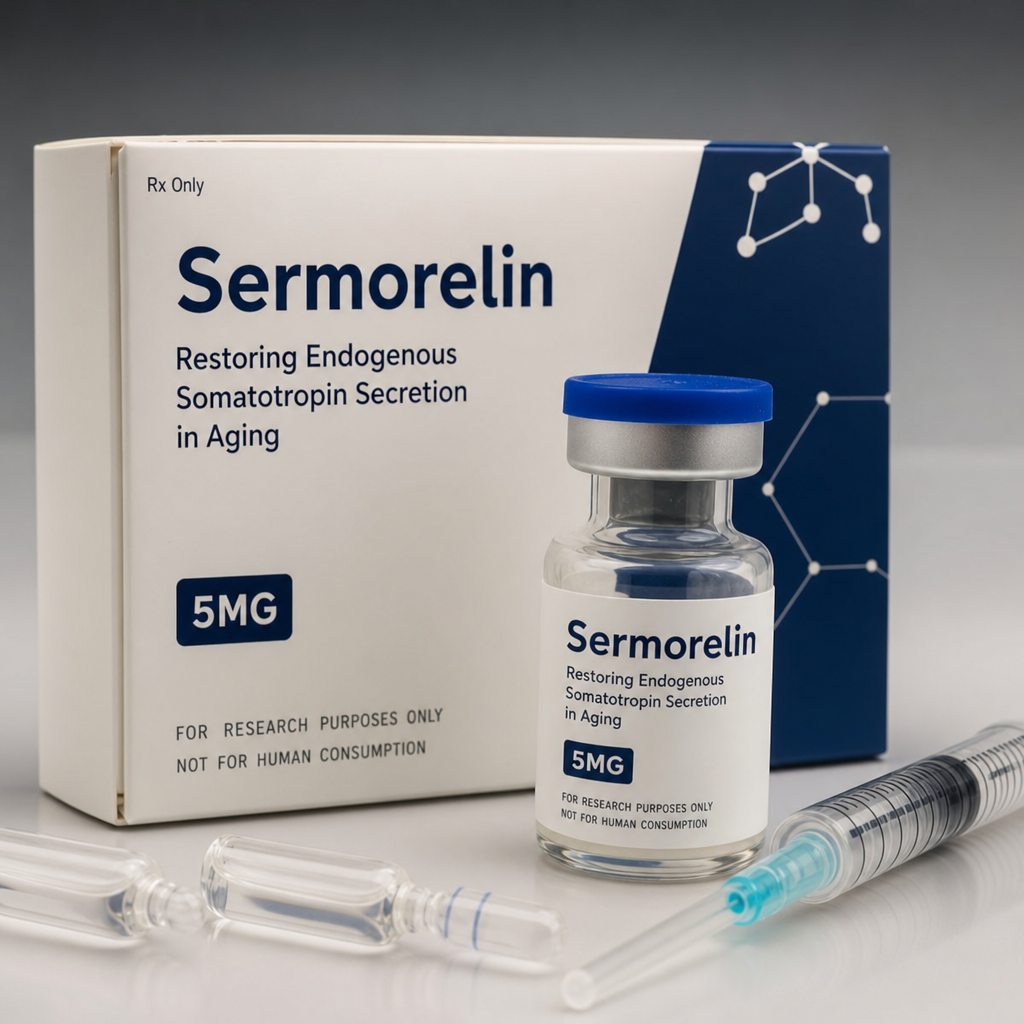
Sermorelin stands out among growth hormone peptides because it has a real medical history. Here is that story, what it does, and what to weigh if a clinic suggests it.
What is Sermorelin?
Sermorelin is a lab-made copy of the first part of a natural brain hormone that tells the pituitary gland to release growth hormone. Rather than replacing growth hormone, it encourages your body to make more of its own, which keeps some of the body’s natural on-and-off rhythm.
Its history
Sermorelin was once an FDA-approved drug, used to help children with growth hormone deficiency grow. The brand was discontinued in 2008. That decision is generally reported as a manufacturing and business choice, not a safety recall. Today, some doctors and anti-aging clinics prescribe it through compounding pharmacies, which makes it one of the few peptides in this group available with a real prescription.
What is known, and what is not
Sermorelin does raise growth hormone and IGF-1 levels in adults. What has not been shown in good studies is that it helps healthy older adults live longer or age better. Clinic claims about energy, sleep, and body composition come mostly from small studies and patient reports.
The risks
- Cancer concern. Like other growth hormone boosters, raising IGF-1 could in theory feed an existing, undiagnosed cancer.
- Blood sugar may rise.
- Common side effects: injection site reactions, flushing, headache, and water retention.
Questions to ask a clinic
- Will you test my IGF-1 and blood sugar before starting, and again after?
- Which licensed compounding pharmacy makes it?
- What would make you recommend stopping?
- Is my primary doctor in the loop? (They should be.)
And make sure your cancer screenings are up to date before you begin.
This article is for general education only. It is not medical advice and not a recommendation to use Sermorelin. Ageless Regeneration does not sell or link to peptide suppliers. Please talk with your doctor before starting any new treatment.