
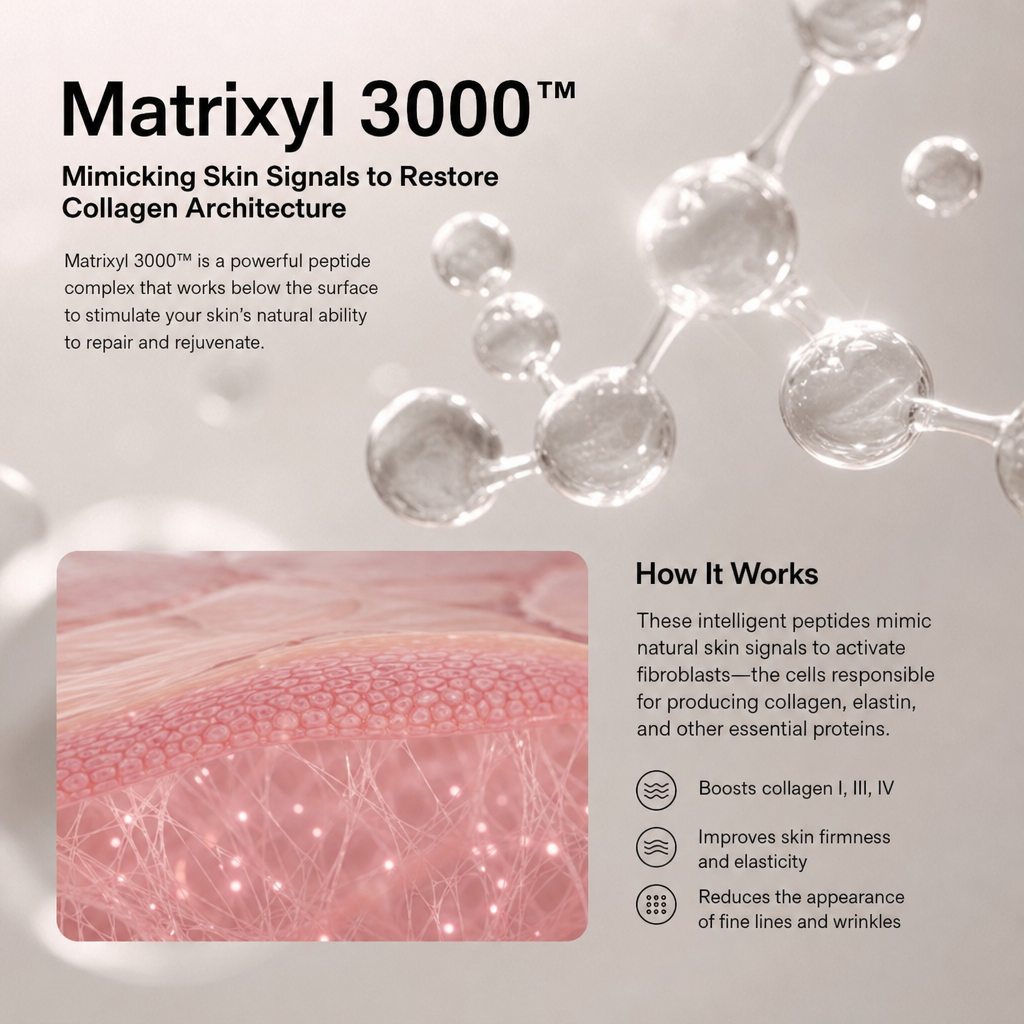
Turn over almost any anti-aging serum and you may find “palmitoyl tripeptide-1” and “palmitoyl tetrapeptide-7” on the label. Together, those two peptides are sold under the name Matrixyl 3000. Here is what they do.
How it works
When collagen in your skin breaks down, it leaves behind tiny fragments. Your skin cells notice those fragments and take them as a signal: “Collagen is being lost, time to make more.”
Matrixyl 3000 mimics those fragments. The idea is to gently trick skin cells into thinking repair is needed, so they make more collagen. It is a clever approach, and it is why these are called “signal peptides.”
What the research says so far
Lab studies show these peptides can boost collagen production in skin cells. A few small studies in people have reported smoother skin and softer fine lines over a couple of months. Much of that research comes from the ingredient’s makers, so expect gentle, gradual improvements rather than dramatic changes.
For comparison, retinoids (like retinol and prescription tretinoin) and daily sunscreen have the strongest evidence of anything in skincare. Peptides are a nice gentler addition, especially for people whose skin does not tolerate retinol.
How to use it
- Apply a serum or cream once or twice a day to clean skin.
- Peptides are generally gentle and pair well with most other ingredients.
- Give it at least 8 weeks.
- Wear sunscreen every day; it protects the collagen you already have.
If you’d like to try it
These links open Amazon search results, so you can compare brands, prices, and reviews for yourself.
See Matrixyl 3000 serums on Amazon
See daily face sunscreens on Amazon
More ideas on our Products page. As an Amazon Associate I earn from qualifying purchases.
This article is for general information only and is not medical advice. If you have a skin condition or are under a dermatologist’s care, check with them before adding new products.