
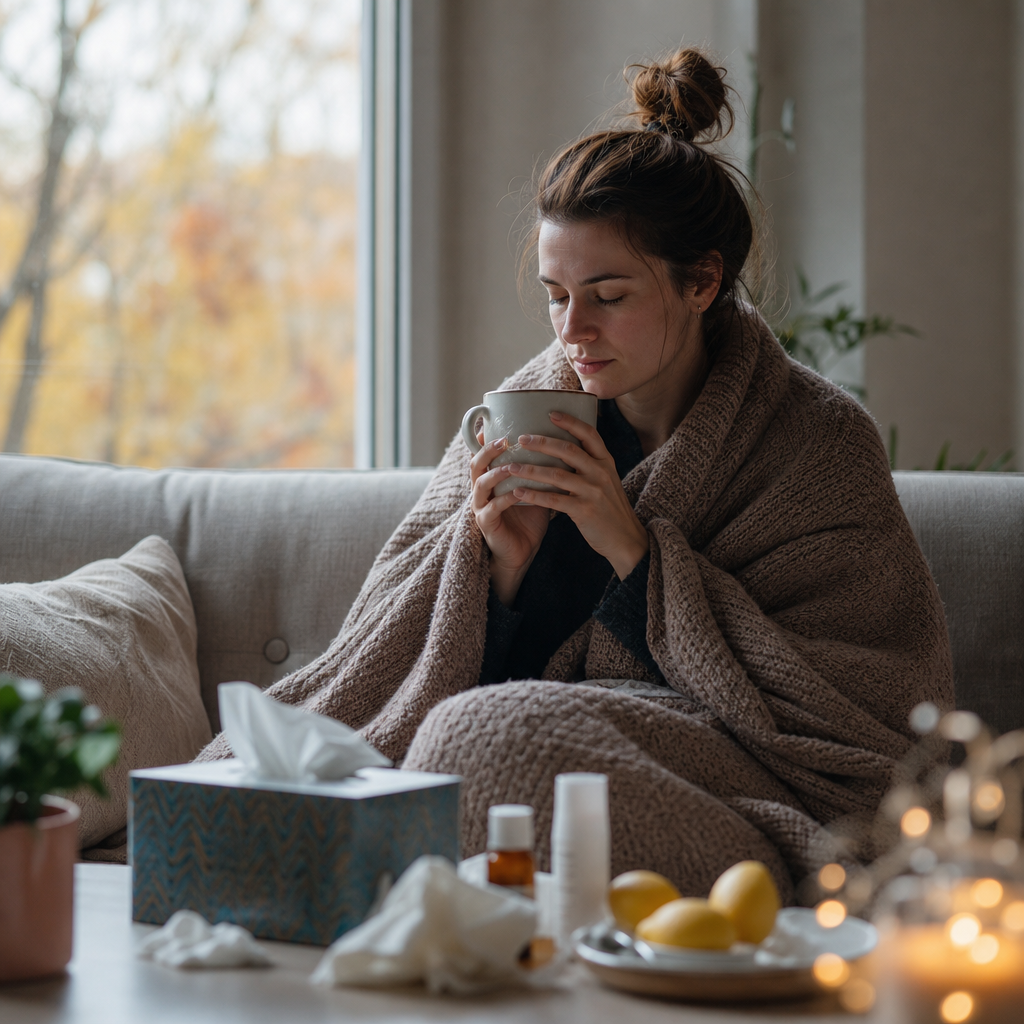
A gentle companion to care: This page offers reflective practices around immune function during cold and flu season. The NeuroCellular names describe the Ageless Regeneration philosophy, not established medical protocols. Visualization, affirmations, breathing, journaling, and meditation may be meaningful forms of self-care; they do not demonstrate treatment of a condition or direct control of cellular function. Use these exercises alongside appropriate professional care, and choose only what feels comfortable.
1. Neuro-Visual Integration (NVI): Visualizing a Strong Immune System
Practice:
Engage in a daily visualization exercise where you picture your immune system as strong, vigilant, and capable of defending your body against cold and flu viruses. Imagine your immune cells actively seeking out and neutralizing threats, keeping you healthy and resilient.
Guided Imagery:
Spend 10-15 minutes each day visualizing your immune system functioning at its best. See your white blood cells as powerful protectors, your body free from illness, and your overall health thriving during cold and flu season. Picture yourself feeling confident and strong, even when exposed to germs.
2. Cognitive Reprogramming Constructs (CRC): Rewiring for Immune Resilience
Affirmation:
Use intention-driven statements like, “My immune system is strong, vigilant, and protects me from illness,” or “Every day, I feel more resilient and confident in my body’s ability to stay healthy.”
Application:
Consider an affirmation as encouragement, not a biological instruction or a promise of recovery. Adapt any wording that feels unrealistic to you. “I deserve care and support today” can be enough, even when you feel uncertain or unwell.
3. Autonomic Modulation Protocols (AMP): Breathing for Immune Support
Breathing Exercise:
Notice your ordinary, comfortable breathing for a short moment. Keep your eyes open if you prefer. There is no need to take forceful breaths, hold your breath, or continue for a set number of minutes. Stop if you feel dizzy, distressed, or uncomfortable.
A comfortable approach:
Let each breath come and go naturally, without trying to fill your lungs completely or change a health measurement. If focusing on breathing is uncomfortable, notice the support of your chair or a familiar object instead.
4. NeuroReflective Documentation (NRD): Journaling for Immune Wellness
Journaling Practice:
Document your thoughts, feelings, and intentions related to your immune health. Reflect on any factors that might be affecting your immune function, and write about your goals for maintaining or improving your body’s defenses during cold and flu season.
Prompt:
“At the end of each day, I will write about how my body felt in terms of immune health and any signs of improvement in resilience. I will set positive intentions for the following day, focusing on how I want my immune system to remain strong and vigilant.”
5. Quantum-Resonance Meditation (QRM): Meditating for Immune Strength
Meditation Practice:
Bring gentle attention to the present moment. Quantum-Resonance Meditation is the site’s spiritual name for a practice, not proof of synchronized brainwaves or cellular healing. You may notice a sound, an image, or your surroundings without requiring a particular feeling.
Guided Session:
Find a quiet space, keep your eyes open or softly rested, and breathe comfortably. As you meditate, visualize your immune system as strong and vigilant, your body protected from illness, and your overall health thriving. Feel a sense of peace and confidence in your body’s ability to stay healthy during cold and flu season.
Conclusion
These practices are optional ways to reflect and offer yourself kindness. They are not evidence that a symptom, organ function, or medical condition has changed. Follow your healthcare team’s advice and use appropriate measurements or clinical evaluation for health decisions.
Remember: Illness and difficult feelings are not failures of mindset. Consistency does not guarantee a medical outcome, and stopping or adapting a practice can be a caring choice. Your well-being deserves practical support as well as encouragement.
Keep this practice in perspective
The guided images are symbolic and optional. If imagining a “perfect” body feels uncomfortable, choose a welcoming place or a simple phrase of kindness instead. Seek medical advice for health concerns, and do not delay treatment while trying these practices.
Learn more from NCCIH’s guide to meditation and mindfulness.