
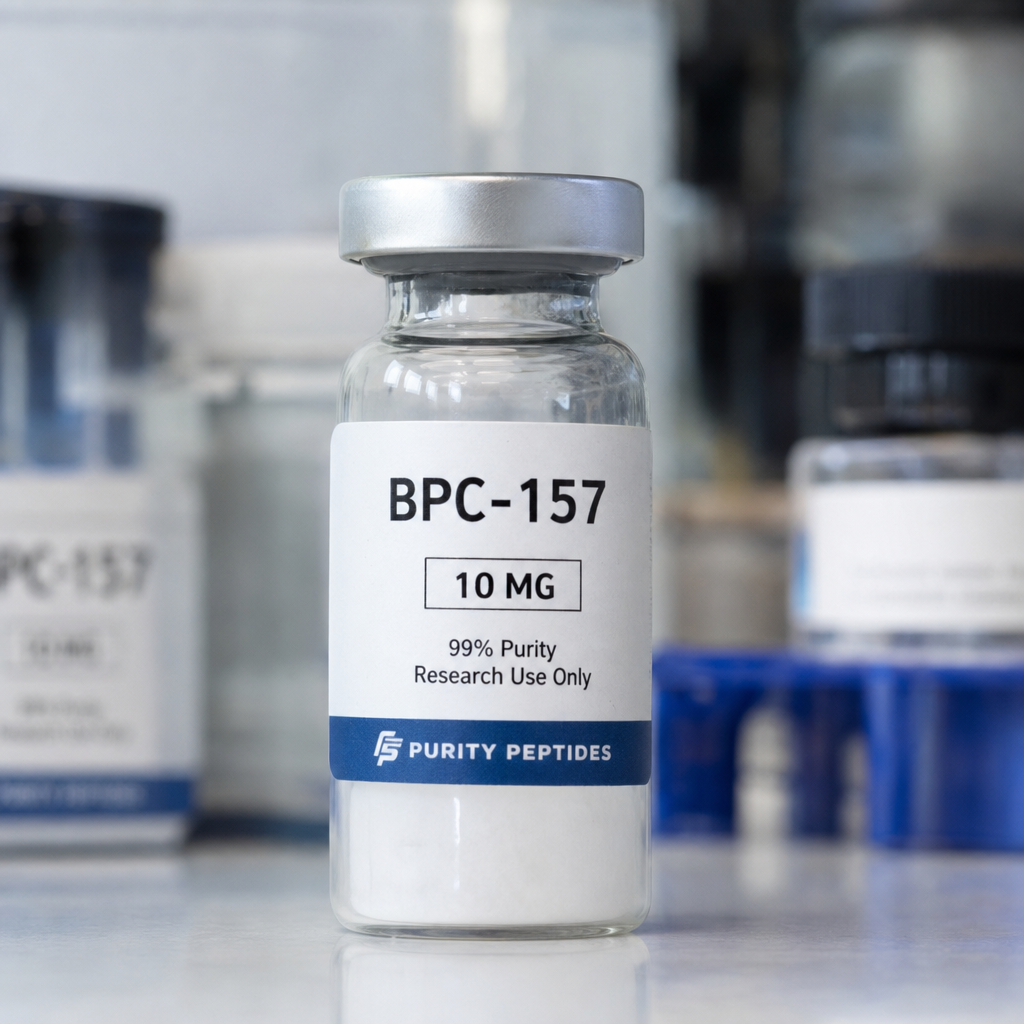
If you have friends who are into longevity, you have probably heard someone rave about BPC-157. It has a reputation as a healing peptide for sore tendons, achy joints, and the gut. Here is what is known, what is not, and what to think about if you are curious.
What is BPC-157?
BPC stands for “body protection compound.” It is a lab-made chain of 15 amino acids based on a protein found in stomach juice. It is usually injected under the skin, though capsules are also sold.
Why people take it
In animal studies, BPC-157 seemed to speed up healing of tendons, ligaments, muscles, and the lining of the gut. It appears to encourage new blood vessel growth and calm inflammation in injured tissue. People take it hoping for faster recovery from injuries, less joint pain, or help with gut problems.
What is known, and what is not
Nearly all of the research on BPC-157 comes from rats, much of it from a single research group. Studies in people are very small and few. That means nobody really knows the right dose for humans, how well it works in people, or what long-term use might do.
One open question worries some scientists: because BPC-157 encourages new blood vessels to grow, there is a theoretical concern that it could help an existing, undiagnosed tumor grow too. This has not been shown, but it has not been ruled out either. It is also banned in competitive sports.
Where things stand legally
BPC-157 is not FDA-approved for any use. Online, it is usually sold labeled “for research use only, not for human consumption,” which means it is not made to the standards required for medicine. Rules are shifting: in 2026, federal health officials moved to ease limits on compounding pharmacies making several peptides, including BPC-157, with a prescription. The situation is still changing, so check the latest before deciding anything.
If you are considering it
- Tell your doctor, even if they will not prescribe it. They can check your bloodwork and keep an eye out for problems.
- Be up to date on cancer screenings before trying anything that encourages tissue growth.
- Ask for independent lab testing. Reputable suppliers share a certificate of analysis from a third-party lab showing purity and sterility.
- Use sterile technique and watch injection sites for redness, heat, or swelling, which can signal infection.
- Try one new thing at a time and keep notes, so you know what is helping and what is not.
This article is for general education only. It is not medical advice and not a recommendation to use BPC-157. Ageless Regeneration does not sell or link to peptide suppliers. Please talk with your doctor before trying any unapproved substance.