
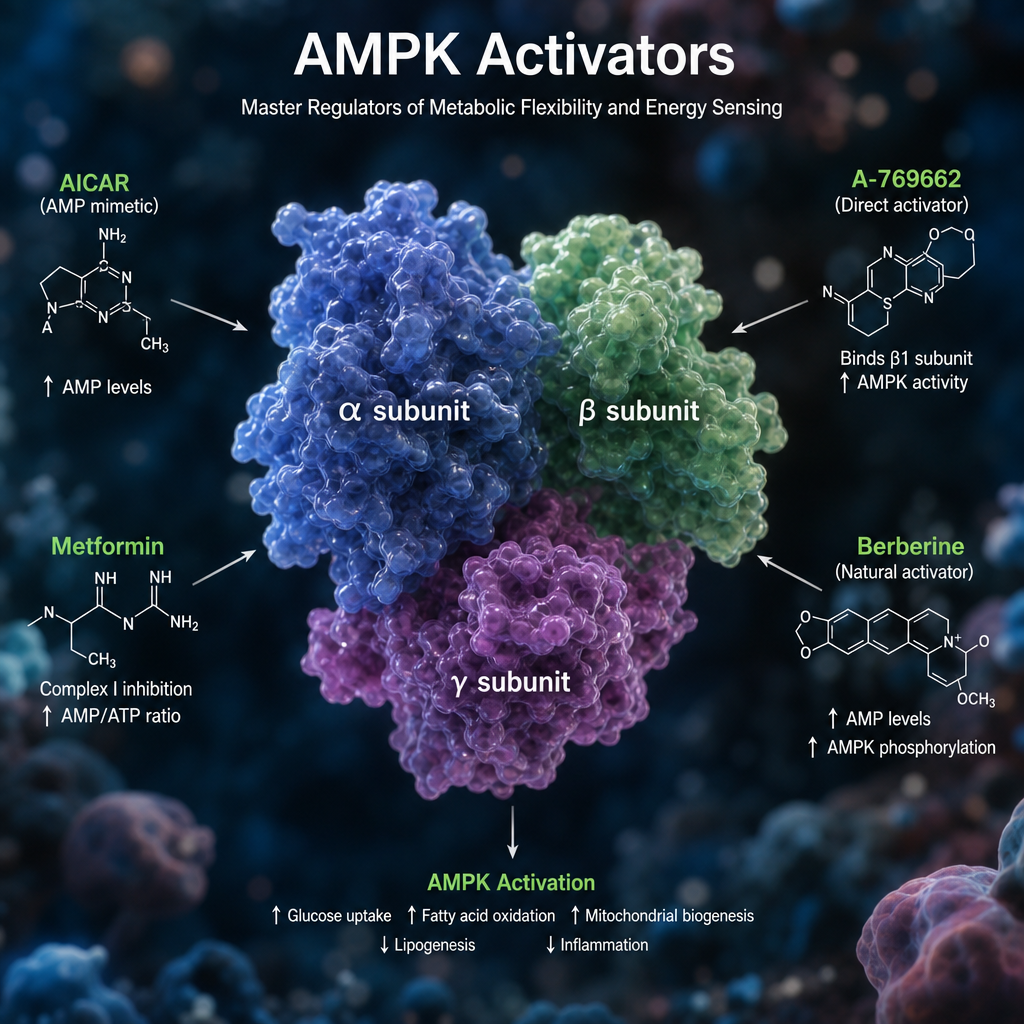
AMP-activated protein kinase (AMPK) serves as the chief energy-sensing enzyme inside human cells. When cellular energy (ATP) levels drop, AMPK activates to switch off energy-consuming storage processes and trigger pathways that generate fresh ATP.
### Metabolic Dysfunction in Aging
As tissues age, AMPK signaling becomes blunted. Cells become less sensitive to insulin, leading to elevated baseline blood glucose, increased fat storage in non-adipose tissues, and reduced mitochondrial efficiency.
### How AMPK Activators Restore Balance
Compounds such as **Berberine**, **Metformin**, and **Alpha-Lipoic Acid (ALA)** stimulate AMPK phosphorylation:
* **Enhanced Glucose Transport:** Increases GLUT4 receptor translocation to cell membranes, facilitating insulin-independent glucose uptake into skeletal muscle.
* **Inhibition of Lipogenesis:** Suppresses fatty acid synthesis in the liver while increasing mitochondrial beta-oxidation (fat burning).
* **Mitochondrial Biogenesis:** Triggers the creation of fresh mitochondria via PGC-1alpha pathways.
### Systemic Anti-Aging Impact
Activating AMPK restores youthful metabolic flexibility, protects against microvascular damage caused by excess blood sugar, and promotes balanced systemic energy usage.