
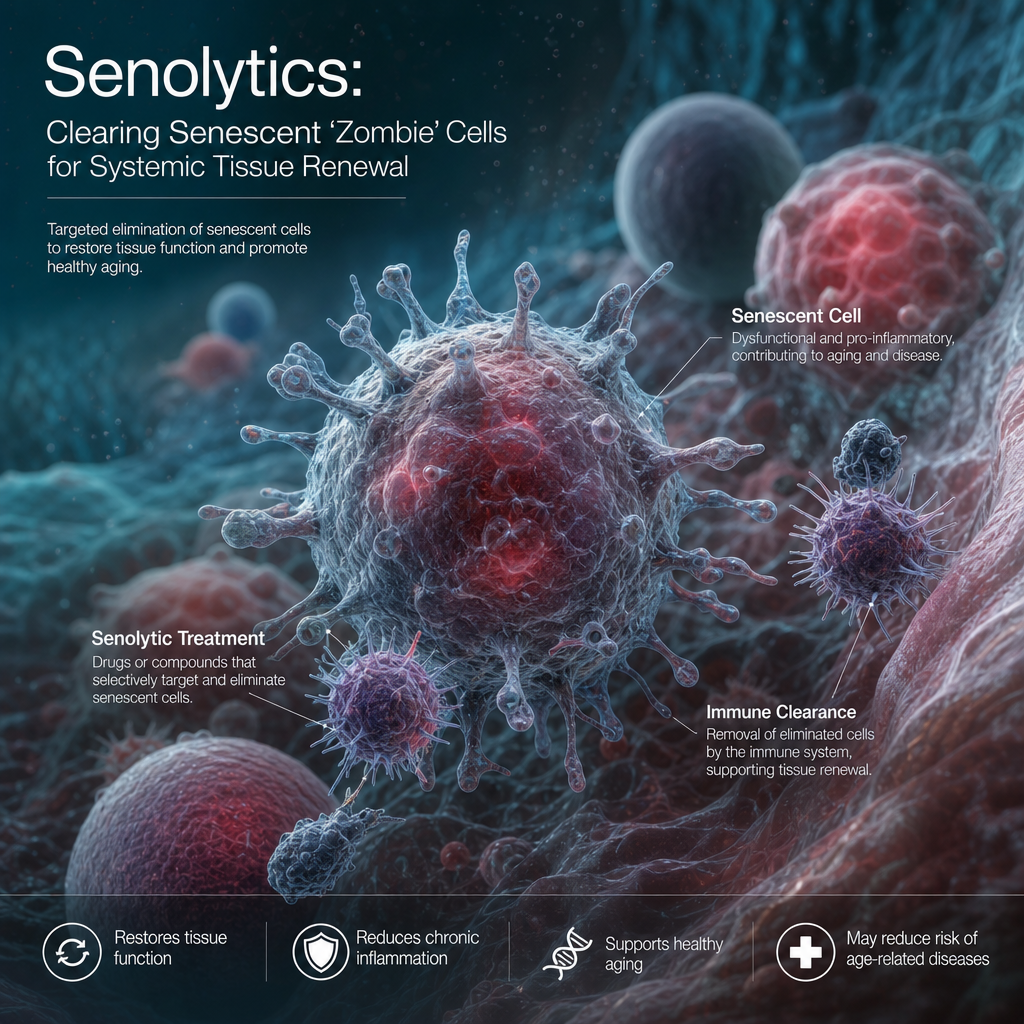
As cells accumulate DNA damage, telomere shortening, or metabolic stress, they enter a state called cellular senescence. Instead of undergoing programmed cell death (apoptosis), these non-dividing “zombie cells” remain active and secretes toxic compounds into surrounding tissues.
### The Senescence-Associated Secretory Phenotype (SASP)
Senescent cells release a destructive cocktail known as the SASP, containing pro-inflammatory cytokines, matrix metalloproteinases (MMPs), and reactive oxygen species. Over time, SASP degrades healthy extracellular matrix proteins, triggers chronic tissue inflammation (“inflammaging“), and forces neighboring healthy cells into senescence.
### The Action of Senolytic Compounds
Senolytics are small molecules designed to transiently disable the survival pathways (SCAPs) that keep senescent cells alive:
* **Fisetin:** A naturally occurring flavonoid shown in preclinical studies to possess potent, targeted senolytic activity across multiple tissue types.
* **Quercetin:** Works synergistically with compounds like Dasatinib to disrupt anti-apoptotic networks in senescent endothelial and mesenchymal cells.
### Impact on Longevity
Intermittent clearance of senescent cells decreases systemic SASP burden, allowing endogenous stem cells to proliferate, deposit fresh structural collagen, and restore youthful organ function.