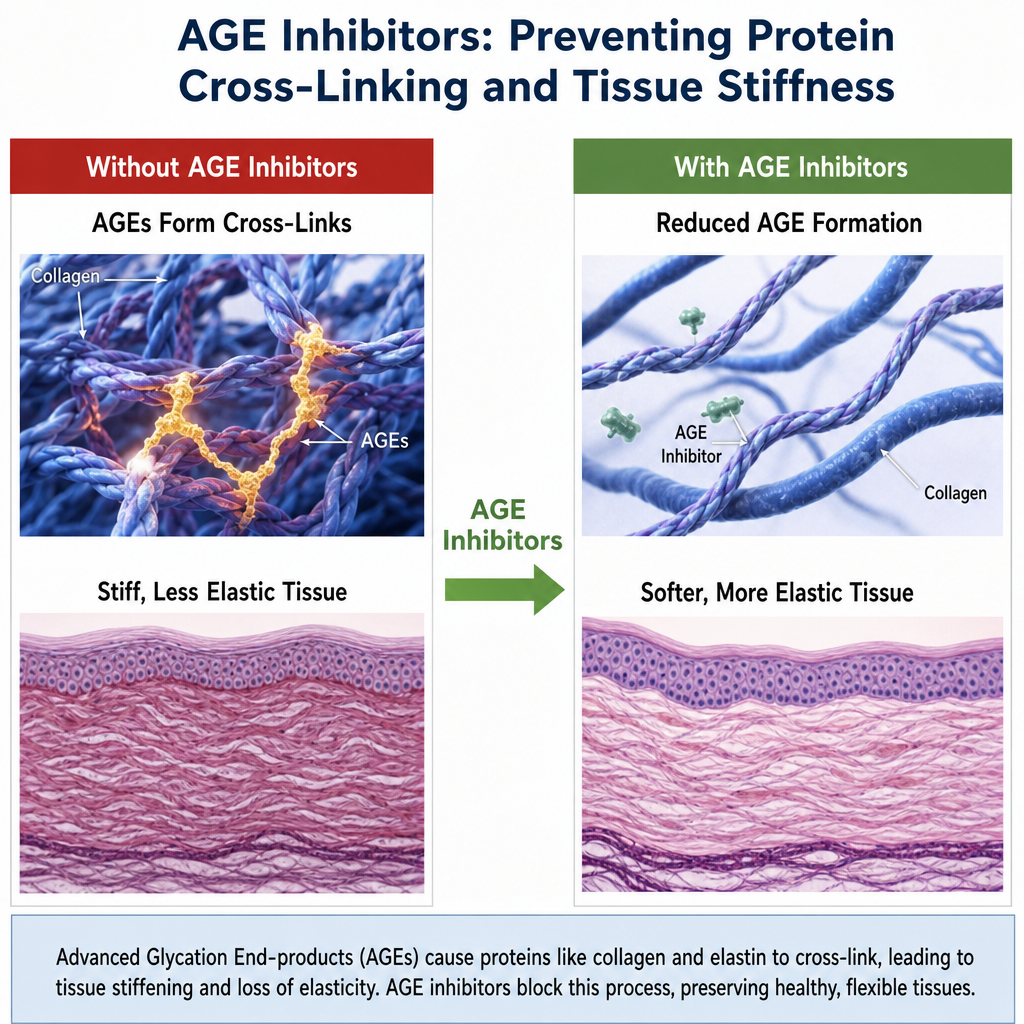
Glycation is a non-enzymatic reaction where excess blood sugars bind to structural proteins, lipids, and nucleic acids. This reaction forms irreversible structures known as **Advanced Glycation End-Products (AGEs)**, causing tissue stiffening and structural breakdown throughout the body.
### How Glycation Causes Aging
AGEs create rigid cross-links between adjacent collagen fibers, causing arterial stiffness, loss of skin elasticity, microvascular eye damage, and renal strain. Furthermore, AGEs bind to RAGE receptors, triggering ongoing tissue inflammation.
### Protective AGE Inhibitors
* **L-Carnosine:** A natural dipeptide that acts as a sacrificial target, binding sugar molecules before they can react with structural proteins. It also reverses early-stage protein glycation cross-links.
* **Benfotiamine:** A fat-soluble derivative of Vitamin $B_1$ that activates the enzyme transketolase, redirecting toxic sugar metabolites away from glycation pathways.
### Therapeutic Benefits
Inhibiting AGE formation preserves youthful flexibility in blood vessels, maintains dermal collagen resilience, and protects delicate microvascular beds across major organs.